Tacoma, WA
Support of Tacoma Home
A 1979 Tacoma home on a sloped lot settled 1.5". 4 helical + 3 driven piles plus carbon fiber straps stabilized the cracked stem wall.
4
helical piles
3
driven piles
1.5
settled (in)
Stop the movement before it stops you
A wall that's bowing inward, cracking, or leaning is under real pressure — and it won't fix itself. Our helical tieback anchors and carbon fiber systems stop the movement permanently, without excavating your yard.
Free · About 90 minutes · No obligation
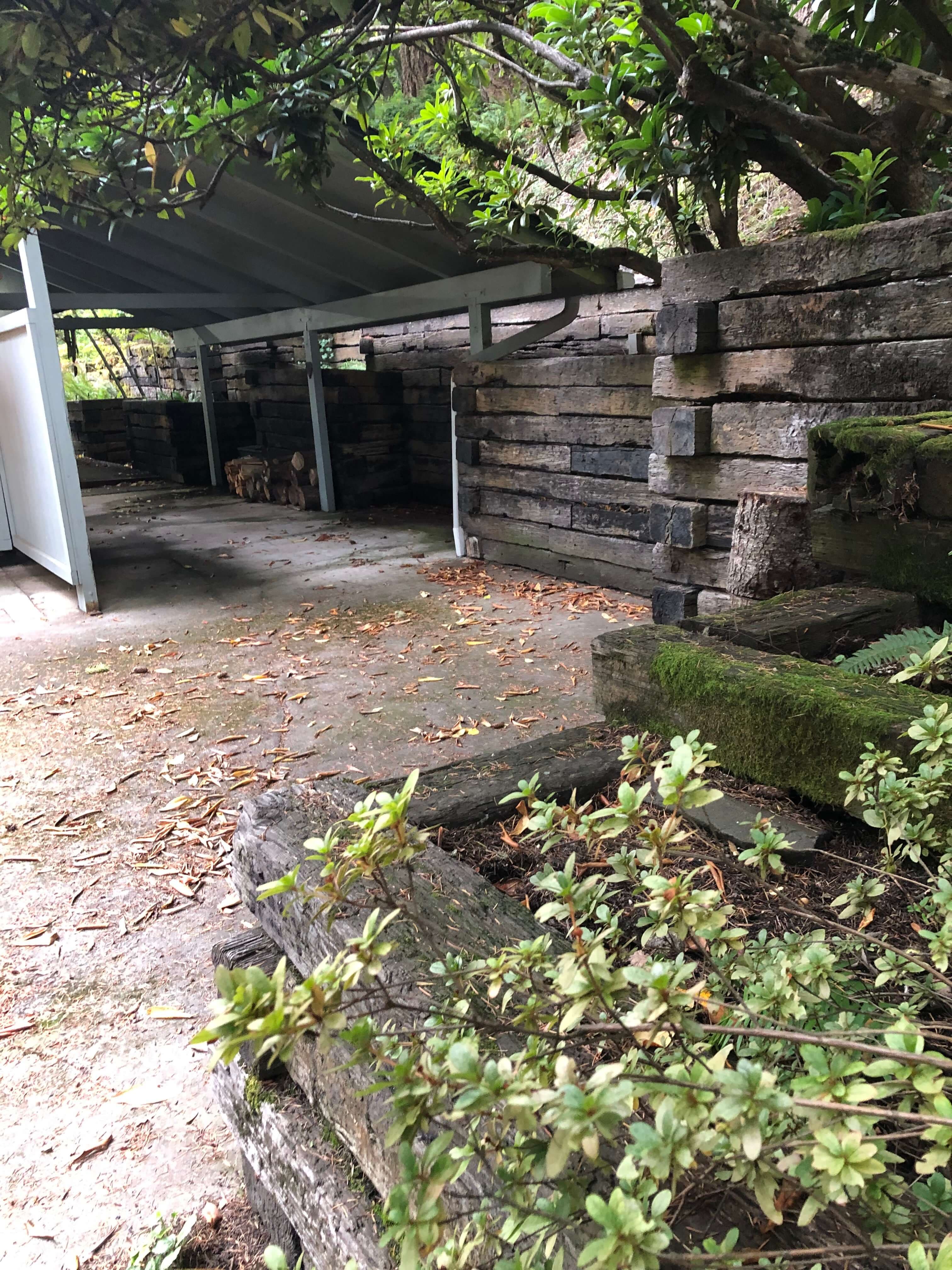
Helical tiebacks + SRS carbon fiber · No excavation required
The problem
Basement walls and retaining walls are built to hold back enormous amounts of soil pressure. When that pressure exceeds the wall’s capacity — from saturated ground, tree roots, heavy vehicles overhead, or simply age — the wall begins to bow inward, crack horizontally, or lean.
In the Pacific Northwest, wet winters mean soil stays saturated for months. That sustained hydrostatic pressure is one of the most common reasons we see basement walls fail in Seattle, Portland, and Eugene.
The risk of waiting: a wall that’s bowing 1 inch will bow further. Once it reaches 2–3 inches, options narrow and costs rise sharply. The earlier we stabilize it, the better the outcome.
How we fix it
We offer two complementary solutions. Depending on the severity of the movement and the wall’s condition, we often use both together.
A tieback anchor is installed by rotating a high-strength carbon steel shaft through the basement wall and into stable soil beyond the pressure zone. Once it hits the specified torque, the anchor is bracketed and tensioned against the wall face — locking the wall in its current position and preventing any further inward movement. Minimal to no excavation, installs in virtually any weather, and shaft sections link together to reach any required depth — even through the mixed glacial till and fill common across Puget Sound.
Best for: walls that have moved significantly and need structural restraint before they can accept surface reinforcement.
The SRS system uses high-modulus carbon fiber fabric saturated with industrial-strength structural epoxy. Once bonded to the wall face, the straps achieve a design tensile strength of over 40,000 lbs — permanently arresting inward movement. Carbon fiber is 10 times stronger than steel by weight, less than 1/8 inch thick, 100% made in the USA, and can be painted to match any finish. No excavation. No unsightly steel beams.
Best for: walls in early-to-moderate stages of bowing, and as a companion to tiebacks on more advanced movement.
When a retaining wall is failing — cracking, leaning, or pulling away from its base — our helical piles and tieback system restore structural integrity. We’ve repaired retaining walls from residential properties in Eugene to a 170-ft cantilevered wall for fire-lane compliance in Portland. Note: carbon fiber alone is not sufficient for a tipping retaining wall — restraint must be provided at the top via tiebacks or anchors. We engineer the full solution, not just one layer.
Real projects
Tacoma, WA
A 1979 Tacoma home on a sloped lot settled 1.5". 4 helical + 3 driven piles plus carbon fiber straps stabilized the cracked stem wall.
Happy Valley, OR
Carbon fiber (SRS-600/660) + tiebacks rescued a bowing school playground wall without full reconstruction.
Eugene, OR
16 helical tieback piles + 24 steel beams arrested a rotated, failing Eugene retaining wall.
Vancouver, WA
19 steel H-beams with timber lagging leveled a sloped Vancouver, WA yard to the home's lower-floor elevation.
The Warranty Trust
Qualifying helical tieback and carbon fiber installations are protected by the Transferable Lifetime Warranty, backed by the Ram Jack National Limited Warranty Trust — a separately funded reserve. The warranty transfers to future owners at closing. Most contractors offer a warranty on paper. We're the only company in the PNW that backs it with guaranteed, secured funds.
FAQ
Not necessarily. Many bowing walls can be stabilized in place with tiebacks and carbon fiber without rebuilding. The free evaluation determines whether stabilization is sufficient or whether the damage has progressed beyond that point. The earlier you call, the more options you have.
Rarely. Helical tiebacks are installed by rotating through the wall into the soil — no large excavation needed. Carbon fiber requires only surface prep on the wall face. Most repairs leave your yard intact.
Carbon fiber's tensile strength (196,000 PSI for the SRS fabric we use) far exceeds mild steel (~58,000 PSI). It's also lighter, non-corrosive, and flexible enough to conform to curved or irregular wall faces. The industrial-strength epoxy bonds it directly to the concrete, so the load is transferred across the full bonded surface.
Yes. Qualifying installations carry the Ram Jack Transferable Lifetime Warranty backed by the funded Warranty Trust, which passes to the new owner automatically.
Free evaluation, no pressure. We'll tell you exactly what your wall needs — and what it doesn't.
Free · About 90 minutes · No obligation